Story
08 June 2026
UN Suriname Presents 2025 Annual Report to Government of Suriname
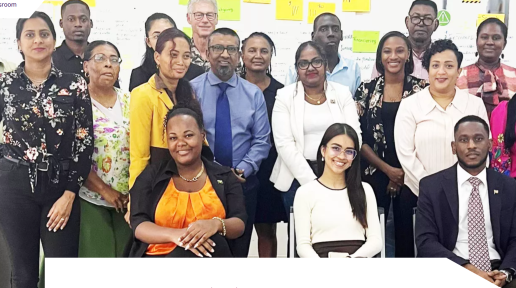
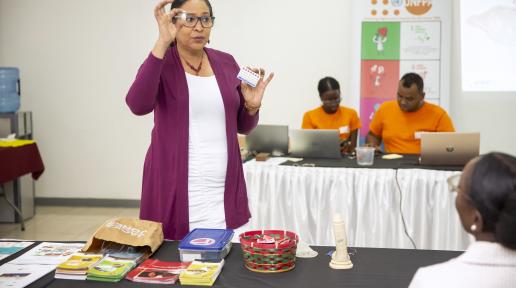
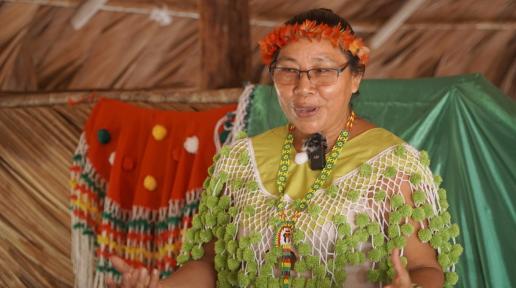
“Transforming Together with Suriname” Paramaribo, Suriname — The United Nations Country Team in Suriname jointly with the Minister of Foreign Affairs, International Business and Cooperation presented its 2025 Annual Report, highlighting more than USD 12 million invested across over 60 development initiatives advancing sustainable development, climate resilience, and social inclusion. The report reflects a year of strengthened partnership and measurable progress, with 18 resident and non-resident United Nations agencies, funds, and programmes working together with the Government of Suriname and national partners to accelerate implementation of the Sustainable Development Goals (SDGs).“This report reflects our shared commitment to delivering tangible results for the people of Suriname—especially those most at risk of being left behind,” said Joanna Kazana, United Nations Resident Coordinator. “It also underscores the importance of sustained investment in institutions, people, and resilience as Suriname looks toward a transformative future. We are proud of our expanding cooperation, especially programmes engaging indigenous and tribal women and girls, supporting education, health and development of the necessary skills that will allow them and their children to take advantage of emerging opportunities.”Delivering Results Across Key Development PrioritiesShared Prosperity and Economic ResilienceThe United Nations supported more inclusive and climate-resilient livelihoods, particularly in agriculture and labour systems. Through the ASTA Joint Programme, implemented by FAO, UNIDO and other agencies, Indigenous and Tribal farmers gained improved access to formal finance through the establishment of a Collateral Support Facility, while climate-smart technologies and digital monitoring systems strengthened productivity and resilience. This work received international recognition through the 2025 UN SIDS Partnership Award. Support to labour market governance advanced public employment services, social dialogue, green enterprise development, and progress toward a national roadmap for formalization, contributing to more inclusive growth.Equality, Wellbeing, and Leaving No One BehindThe United Nations supported stronger systems for health, education, data, and social protection. Suriname achieved a historic milestone in 2025 with WHO certification as a malaria-free country—the first country in the Amazon Basin. Support also expanded telehealth services, strengthened adolescent mental health programmes, and advanced prevention of non-communicable diseases. In education, the UN supported implementation of the National Education Policy 2024–2031, including progress in skills development and TVET reform. In social protection, key results included the development of Suriname’s first Disability Inclusive Policy and Strategy and continued advancement of the National Social Protection Strategy.Climate Resilience and Sustainable Natural Resource ManagementSuriname continued to strengthen its environmental leadership. UNDP, ILO, UNICEF and UNFPA support contributed to the country’s updated Nationally Determined Contribution (NDC), development of climate finance mechanisms, and expansion of renewable energy solutions for Indigenous and Tribal communities. Additional efforts supported mangrove restoration, biodiversity finance planning, and more responsible mining and fisheries management. These are not isolated environmental projects—they represent investments in resilience, livelihoods, natural capital, and the long-term wellbeing of future generations.Peace, Safety, Justice, and Rule of LawThe UNDP, UNICEF and IOM supported stronger institutions and more inclusive governance. This included improvements in electoral systems, the establishment of the Child Ombudsman Institute, and adoption of the National Migration Policy Plan. Support also strengthened firearm control and border security, enhanced responses to gender-based violence, and expanded youth participation and gender-responsive policymaking. These efforts strengthen not only institutions, but also public trust, which is essential for sustainable development.Connecting National Progress with Global CommitmentsThese achievements are part of a broader national and global development trajectory.In 2025, Suriname presented its second Voluntary National Review (VNR) at the High-Level Political Forum, reporting progress across all 17 Sustainable Development Goals.The VNR highlights advances in:SDG coordination through the National SDG Committee and SDG PlatformYouth engagement via the SDG Youth Ambassadors ProgrammeProgress in social protection, education reform, and environmental governanceContinued efforts toward macroeconomic stabilizationAt the same time, it underscores ongoing challenges, including financing constraints, institutional capacity gaps, human resource limitations, and data availability.----------------Over the past year, the United Nations continued to work in close partnership with the Government and people of Suriname under the Multi-Country Sustainable Development Cooperation Framework, fully aligned with national priorities and the country’s development agenda. In 2025, the UN’s required budget was USD 17.4 million, of which USD 14.2 million was mobilized, and USD 12.0 million was spent - reflecting an 85 percent delivery rate, the highest during the current Cooperation Framework period.